The Meal That Follows the Fishing Calendar
A fishing calendar meal turns a harbor’s changing catch into a flexible shared menu, with practical ways to ask what’s available and choose what to serve.
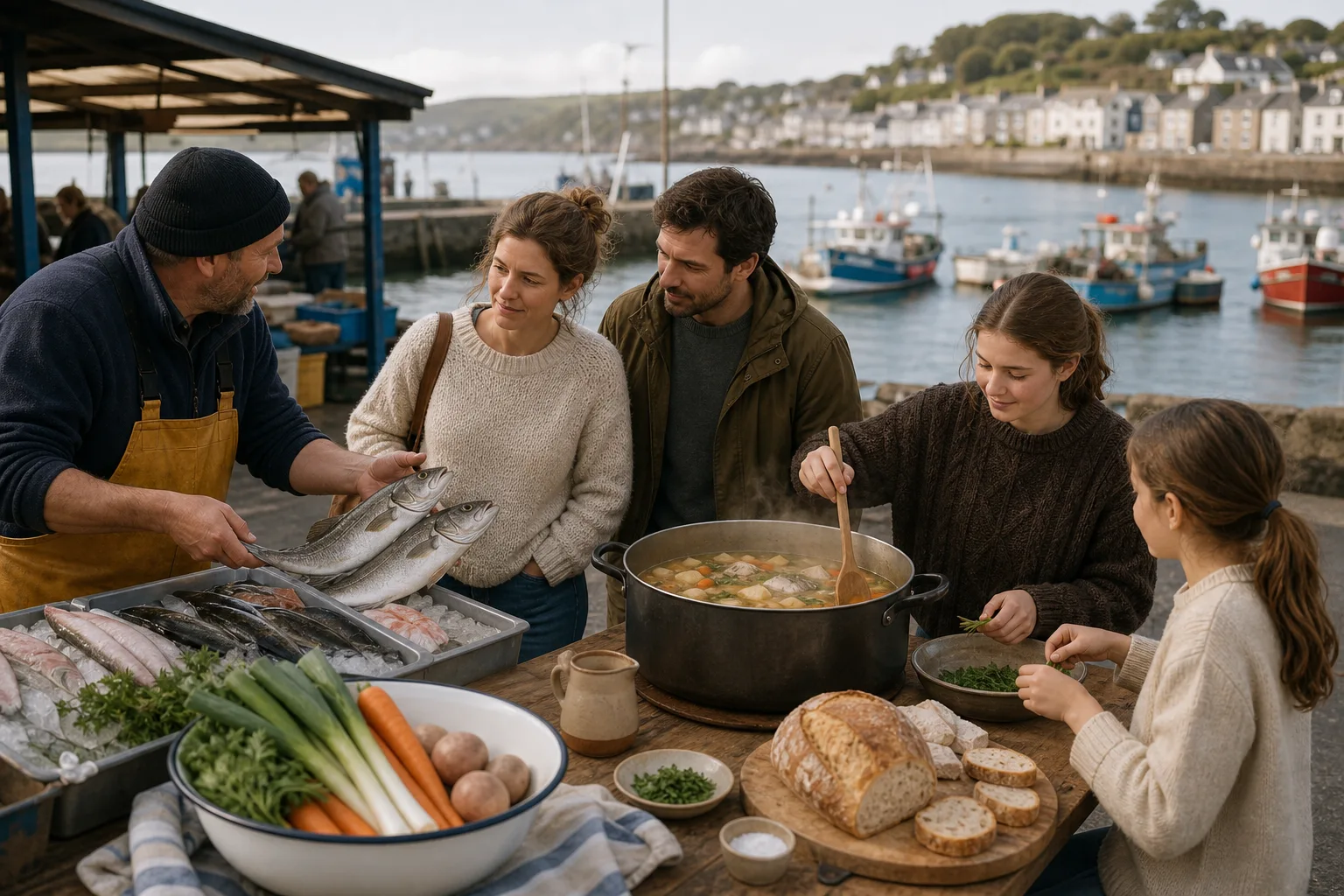
At a harbor market, a cook arrives expecting mackerel and leaves with a different fish after asking what boats brought in. A fishing calendar meal begins with that exchange: the catch available today, the work behind it, and the people gathered to eat.
In a coastal community, a calendar may reflect seasonal work and local custom, but it is not a fixed menu. Treat it as a prompt to ask questions, not as proof that every household follows the same schedule or recipe.
Catch and calendar
Availability varies with local waters, fishing practices, weather, and applicable rules. Ask a fish seller, harbor cooperative, or fisheries office what is available now and what rules apply. A calendar gives context; it cannot tell you what a particular stall has today.
Consider a landing-day supper in which neighbors bring side dishes while a household cooks the fish. The meal’s character comes from the timing, shared work, and local supply as well as the ingredients. Ask a host how the gathering works instead of presenting one family’s practice as a regional standard.
Three meal formats
Fish as the main dish
If the seller can identify the fish and explain a suitable cooking method, build the meal around it. Grilling, steaming, or simmering may fit different fish and occasions. Add what suits the table, such as rice and herbs, bread, beans, or vegetables.
A shared pot
A soup or stew can accommodate suitable fish, vegetables, and pantry ingredients when the expected catch changes. Like a serving bowl with room for several ingredients, the pot lets the meal adjust without making one item carry the whole menu. Ask guests to bring specific sides if contributions need coordinating.
Preserved fish
Salting, smoking, drying, fermenting, and canning are distinct methods, each with its own food-safety requirements. For home preservation, consult current instructions from an authoritative source, such as a local university extension service or a relevant government food-safety agency, and follow the guidance for the exact method and product. If you cannot confirm safe handling and storage instructions, leave the preserved item off the menu and choose another ingredient.
Choosing a fishing calendar meal
Start with the gathering and the ingredients you can identify. For each check below, choose the action that matches what you learn.
- Fish identity: Check whether the seller can identify the fish and its source. If both are clear, ask which cooking methods suit it; if either is unclear, ask again or choose an ingredient with a known identity.
- Meal focus: Check whether the group wants fish at the center. If so and suitable fresh fish is available, serve it simply; if not, build the meal around another ingredient or a shared pot.
- Guest contributions: Check whether guests can coordinate what they are bringing. If they can, assign specific sides for a flexible meal; if they cannot, plan a simpler menu with clear roles.
- Expected catch: Check whether the anticipated fish is actually available. If it is missing but the seller can identify a suitable alternative, adapt the recipe; if no suitable fish is available, use vegetables, grains, or pantry foods.
- Preserved product: Check whether its source and handling instructions are clear. If they are, follow current safety guidance for that product; if they are not, leave it off the menu and choose a fresh or non-seafood alternative.
- Local custom: Check whether a host can explain how the gathering is organized. If they can, follow their directions; if they cannot, ask what help is useful rather than assuming a community-wide rule.
Say a family plans a harbor supper for four adults, expecting two whole mackerel, four cups of chopped vegetables, and one loaf of bread. The seller says mackerel is unavailable but identifies two whole pollock as suitable for soup. The family asks how to cook that fish, uses the four cups of vegetables in the pot, and sets out the loaf for the table; relatives bring side dishes. The observable result is a soup-centered supper using the available catch. If the seller cannot identify a suitable substitute, the family leaves fish out and makes the vegetables and bread the meal’s base instead.
Fishing calendar meal questions?
How does a fishing season shape meals?
It affects which ingredients are available and when people may gather to buy, cook, share, or preserve them. Its influence can show up in a meal’s timing and social form, not only in the fish served.
How can I learn what is available?
Ask a local fish seller, harbor cooperative, or fisheries office about current supply and applicable rules. Their local information is more useful than assuming a general calendar applies everywhere.
Does a seasonal meal need fresh fish?
No. Depending on local practice and the occasion, preserved fish, other ingredients, or a meal without seafood may fit. For preserved food, follow current safety instructions for the specific product and method.
What should I bring to an unfamiliar gathering?
Ask the host what to bring and whether a practical task, such as preparing a side dish or setting the table, would help. Follow their directions rather than treating one household’s arrangements as a rule for the area.
Let supply lead
A fishing calendar meal connects a catch with the work and gathering around it, without requiring a fixed recipe. Ask what is available, choose a format that fits the occasion, and check authoritative current instructions before serving home-preserved fish. The most useful calendar is one that helps you ask better questions at the harbor stall.
Keep exploring

The Orchard Between Two Kitchens
Trace how apples take on different roles across neighboring food traditions, and learn to choose a…

A Market Stall Has Its Own Geography
Market stall geography helps you trace one ingredient from its stated source through the market, so…